
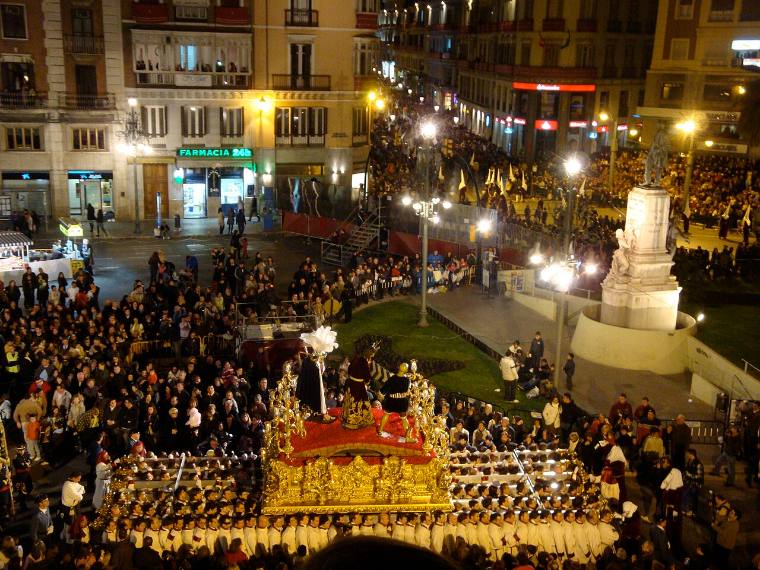
Of all Andalucía's music, none is more startling than the saeta. During the Semana Santa processions, as the great floats sway through the streets, a voice suddenly rings out from a balcony — no guitar, no warning — and everything stops to listen.
The word means arrow, and that is exactly how it lands: a short, piercing flamenco lament aimed straight at the passing image of Christ or the Virgin. The bearers halt, the drums fall silent, and for a minute the whole street belongs to one singer and one held note.
It sits right on the border between religion and flamenco. The saeta borrows the raw phrasing of the deep song and aims it at heaven, which is why the greatest flamenco voices have always treasured it — to sing one well, from a balcony, is a kind of honour.
You cannot schedule the magic. The best saetas are half-expected and wholly unforgettable, a reminder that in this corner of Spain the sacred and the sung have never really been separate things.

