
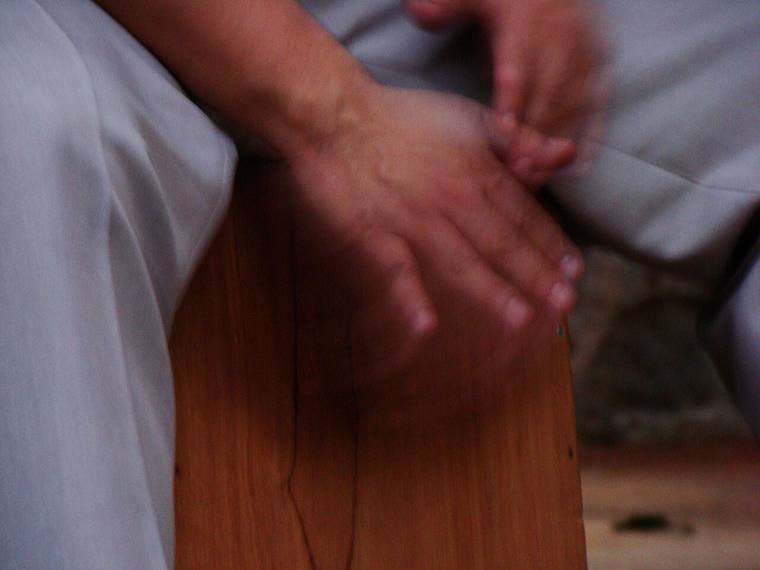
Sit down at almost any flamenco show today and somebody will be perched on a plain wooden box, drumming its front face with bare hands. It looks like something that has always been there. It has not: the cajón has been part of flamenco for less than fifty years.
The story is unusually well documented. In 1977 Paco de Lucía was in Lima, at a gathering at the Spanish ambassador's residence, where the Peruvian percussionist Caitro Soto was playing. Rubem Dantas, the Brazilian percussionist in the sextet Paco had just formed, heard the possibilities and suggested they bring the instrument home.
They did. It reached record buyers with Paco's group at the start of the 1980s and spread at remarkable speed. Spanish makers then altered it, fixing guitar strings or snares behind the front board to give a metallic rasp the Peruvian original does not have.
Purists grumbled, and a few still do, that a box has no business anywhere near cante jondo. Everyone else simply adopted it, and it is now the first thing many young players learn. A tradition stays alive by absorbing things, not by refusing them.

