
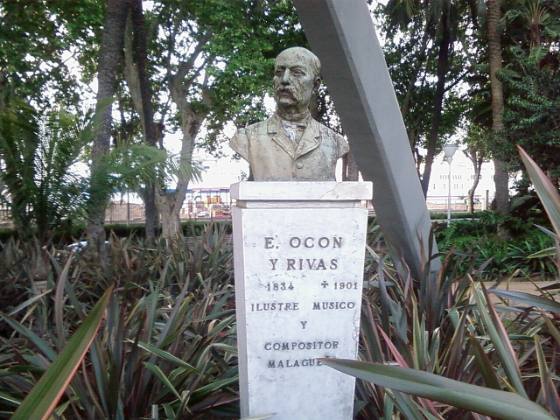
He was born in Benamocarra, up in the Axarquía, in January 1833. Eduardo Ocón y Rivas became an organist, a composer, and — the thing Málaga still owes him for — the founder and director of the city's conservatory.
His lasting monument, though, is a book. For years he travelled and listened, writing down popular melodies that until then had lived only in people's memories. In 1874 he published them as Cantos españoles, a collection of national and popular airs, issued by the German house Breitkopf und Härtel.
That volume quietly became a reference work for the next generation. Bretón, Vives, Pedrell and Falla all consulted it. Ocón taught harmony and composition to Amadeo Vives, and counted Albéniz and Granados among his circle.
He died in Málaga in February 1901. If you have ever heard a Spanish orchestral piece with a village tune buried somewhere inside it, there is a fair chance the trail runs back through a Málaga organist who decided those tunes were worth saving.

